



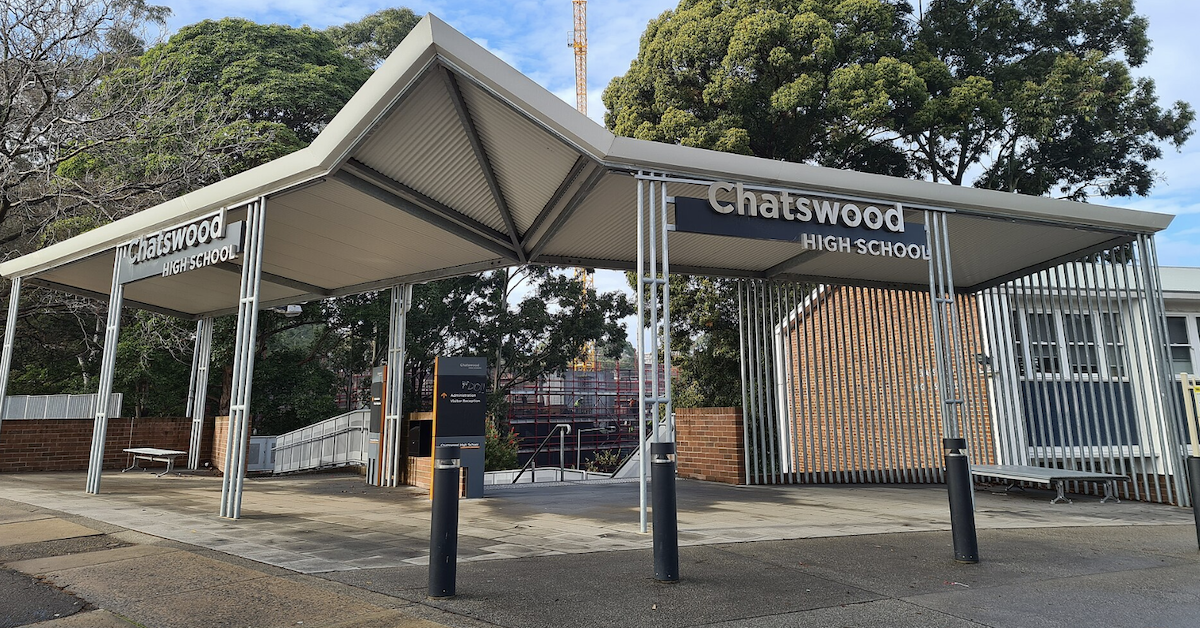
Chatswood High School is already reducing some classroom screen use as New South Wales prepares to impose statewide limits on laptops, tablets and desktop computers in public schools.
Principal Robin Chand has said the staff noticed improvements in students’ handwriting and engagement after cutting back some digital-device use, while also linking fewer screens with stronger interaction between students and teachers. Student Archie Newman, 17, said working with hard-copy books, pens and paper helped him slow down and think more deeply while reducing the distractions he associated with digital technology.
Technology remains part of school life. Chatswood High continues to operate a Bring Your Own Device program and maintains policies governing mobile phones and digital devices.
The school’s experience now offers a local example of the direction NSW public schools will be required to take from 2028.
Youngest students face the tightest limits
Primary classrooms face the sharpest adjustment. Kindergarten to Year 2 students will be limited to the equivalent of up to 15 minutes a day on individual devices, calculated across a week of lessons. The allowance rises to 30 minutes for Years 3 and 4 and 45 minutes for Years 5 and 6.
Secondary schools will operate under proportional caps. Screen use for Years 7 to 10 will be limited to up to one-quarter of the time allocated to each subject across a week, while Years 11 and 12 students may use devices for up to half of their subject time.
The guidelines will also recommend against using digital devices for homework before Year 5 and recommend at least one hour of pen-and-paper learning each day. Digital literacy will remain part of the curriculum, with online tools continuing to be available for educational purposes.
Australian students report heavier device use
The policy changes follow the release of the OECD’s 2025 Programme for International Student Assessment, which showed declining reading and mathematics performance across many education systems.
Australian students reported spending an average of 2.6 hours a day using digital devices at school for learning activities, compared with an OECD average of 1.7 hours. About 39 per cent of Australian students said their peers were often distracted by digital devices during most or all science lessons, compared with 28 per cent across the OECD.
The OECD found that moderate educational device use can be associated with stronger outcomes, while frequent digital distraction is linked with poorer learning attitudes and, in many education systems, lower performance. In Australia, however, reported classroom distraction was not associated with a statistically significant difference in science performance.
The upcoming restrictions build on the existing statewide mobile phone ban in public schools, which took effect on 9 October 2023. The new rules extend the government’s approach from phones to devices routinely used for schoolwork.
Published 14-Sept-2026